
Framing Services
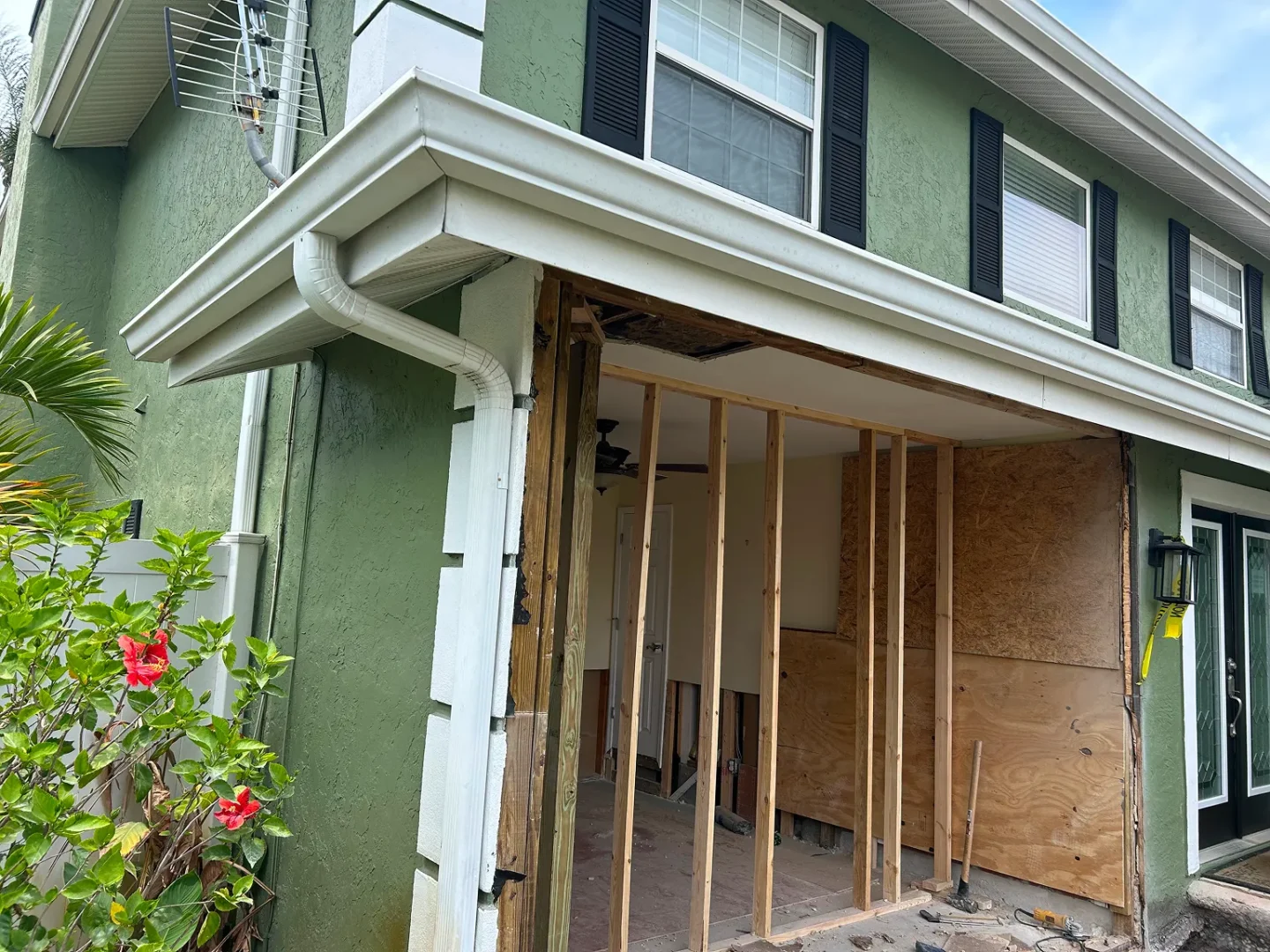
Framing is the Bones of Your Home or Business
Whether you’re building a new home from the ground up, converting a patio into livable square footage, or tackling a major commercial renovation, the quality of your framing work sets the tone for the entire project.
Our Three-Step Process
Here’s how our framing takes place.
Step 1: Plan Review and Layout
Before a single board is cut, our crew reviews the architectural and structural plans in detail. We verify measurements, confirm load-bearing points, and lay out wall lines on the slab or subfloor using chalk lines and laser levels. This step is about precision, every wall, opening, and connection point gets mapped before work begins.
Step 2: Framing and Assembly
This is where the structure takes shape. We cut and assemble wall sections. Floor joists, ceiling joists, roof rafters or trusses, and any engineered beams are installed according to the structural plans. Headers go in above every door and window opening. Bracing is added to resist lateral forces.
Step 3: Inspection and Verification
Once framing is complete, we conduct our own quality review before calling for the official building inspection. We check plumb, level, and square on every wall. We verify stud spacing, header sizes, and nailing patterns. When the inspector arrives, we’re confident the work will pass, because we’ve already held ourselves to that standard.
Interior Wall Framing for New Builds and Renovations
Interior wall framing is where a floor plan stops being a drawing and starts becoming a real space. Using vertical studs, horizontal top and bottom plates, and joists anchored to the foundation or subfloor, we create the room divisions that turn an open shell into functional, livable areas.
For new builds, this means translating architectural blueprints into precise wall placements, bedrooms, bathrooms, kitchens, hallways, closets. Every measurement matters. A quarter-inch deviation in framing can cascade into problems with cabinetry, tile work, and trim down the line.
Renovations bring their own set of challenges. Existing structures don’t always cooperate. You might discover outdated framing methods, hidden plumbing runs, or electrical that wasn’t installed to current code.
Interior wall framing during a renovation requires experience reading the existing structure and adapting without compromising what’s already there.
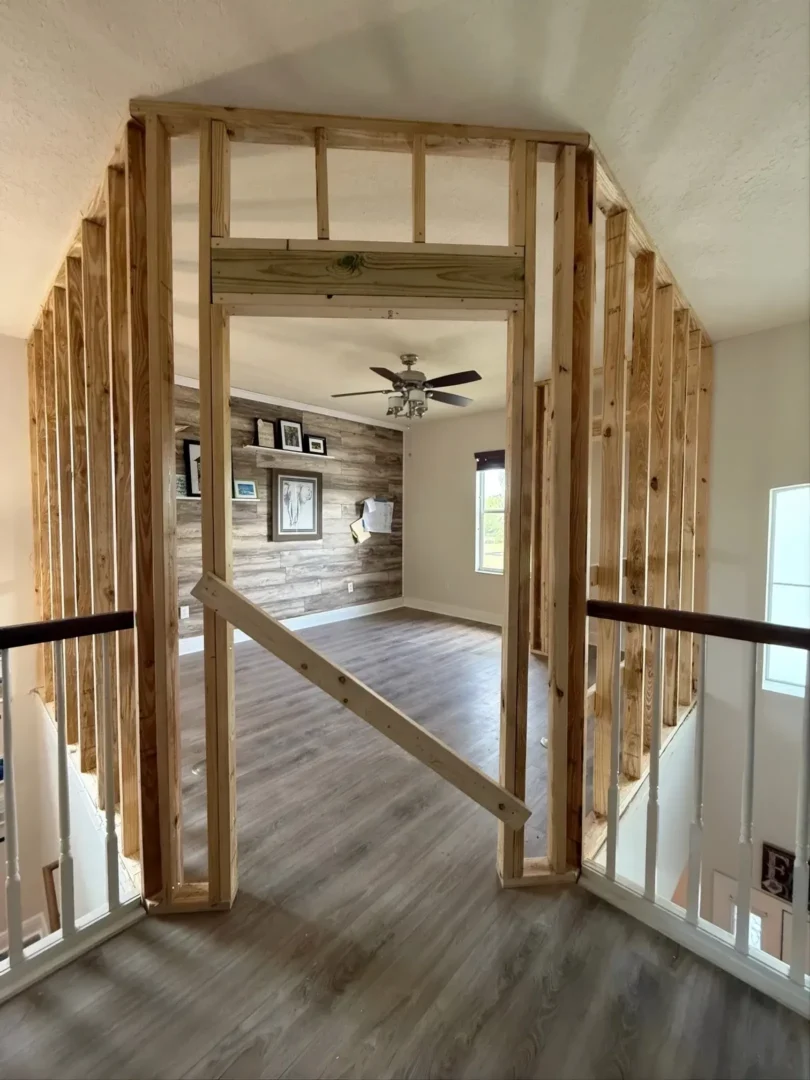
Open-Concept Layouts and Load-Bearing Wall Modifications
Open-concept living continues to be one of the most requested layout changes we see, and for good reason. However, opening up your space must be done with care.
Load-bearing walls carry the weight of the structure above them, roof loads, upper floors, sometimes both. Removing or modifying one without proper engineering is dangerous. We’ve seen DIY attempts and shortcuts from inexperienced contractors that resulted in cracked ceilings, shifting door frames, and compromised roof structures.
Our approach to load-bearing wall modifications starts with a thorough structural assessment. We determine exactly what loads the wall is carrying, then engineer an appropriate solution, typically a beam or header system that redistributes those loads to properly supported points.
The result? That open, airy layout you’ve been envisioning, built on a framework that’s every bit as strong as the original.
Door Opening Enlargement and Window Opening Modification
Want to widen a doorway for better flow between rooms? Need to enlarge a window opening to let in more natural light or accommodate a new design? These modifications are more involved than most homeowners realize.
Every opening in a framed wall requires a header, a horizontal structural member that transfers the load around the gap. When you change the size of an opening, you’re changing the load path. That means installing properly sized reinforced headers supported by king studs and jack studs (also called trimmer studs) that carry the weight down to the foundation.
Get it wrong, and you’ll see cracking drywall and sagging headers within months. Get it right, and the modification integrates seamlessly into the structure as if it was always part of the original design.
Framing for Remodels: What Homeowners Need to Know
Framing for remodels is a different animal than new construction. With new builds, you’re starting from a clean slab or foundation. Remodels mean working within and around an existing structure, one that has settled, shifted, and aged over the years.
Permits are almost always required. Any framing modification that affects the structural integrity of your home, removing walls, adding openings, building additions, will need a permit.
Inspections are part of the process. Framing inspections happen before drywall goes up. An inspector will verify that the work meets code requirements for stud spacing, header sizing, fire blocking, and overall structural adequacy.
Hidden surprises are common. Once you open up walls in an older home, you may find outdated wiring, plumbing that doesn’t meet current code, inadequate insulation, or even previous repairs that were done improperly. An experienced framing contractor knows how to adapt on the fly without derailing your timeline or budget.